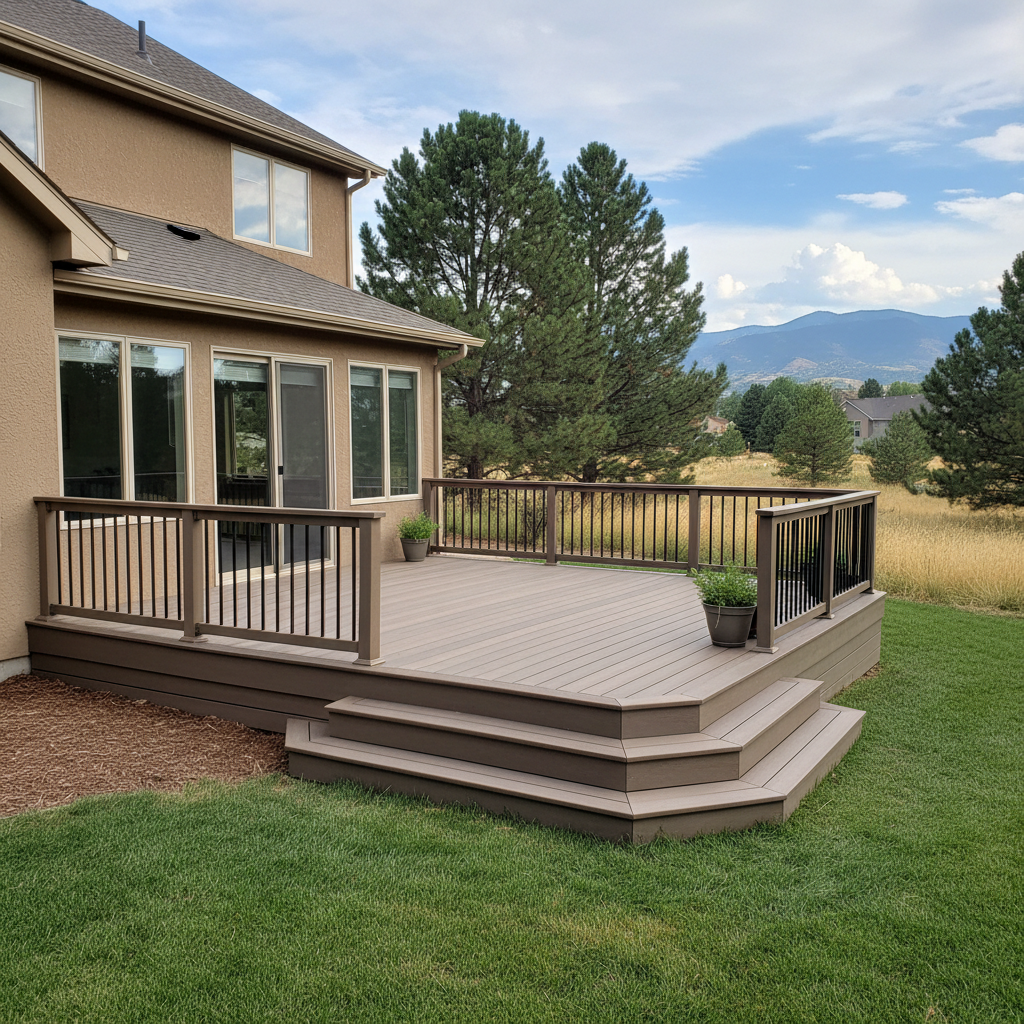
Alright, let's talk Trex. Everyone loves the idea of a low-maintenance deck, and Trex is usually the first name that pops into their head. But then you start looking into it and wonder, "What's this really going to cost me?" It's not just a flat price per square foot, you know? And anyone who tells you it is probably isn't giving you the full picture. I've been building decks around Littleton for years, and I've seen all sorts of projects, from small backyard patios to elaborate multi-level setups.
What Makes Trex Deck Prices Go Up or Down?
A few big things really drive the price of a Trex deck. It's not just the material itself, though that's a chunk of it. Here's what I look at when I'm putting a quote together:
- Deck Size and Shape: This is obvious, right? A bigger deck means more materials and more labor. But shape matters too. A simple rectangle is always cheaper to build than a deck with lots of angles, curves, or bump-outs. Every extra cut and joint just adds time and complexity.
- Trex Lineage: Trex isn't just one product; they've got different lines. You've got your Trex Enhance, Select, and Transcend. Enhance is usually the most budget-friendly, Select is a step up, and Transcend is their premium line with the most realistic wood grain and scratch resistance. Naturally, the higher-end stuff costs more per linear foot.
- Foundation and Framing: This is huge, and often overlooked. If you're replacing an old deck, can we reuse any of the existing framing? Probably not, especially if it's old pressure-treated lumber that's seen better days. Building a new, solid foundation, digging proper footings (which can be a pain in some of Littleton's clay-heavy soils), and constructing a strong frame is critical for safety and longevity. This is where you absolutely don't want to skimp.
- Railing Choice: Trex offers its own composite railings, which are great, but you can also go with aluminum, steel, or even custom wood with composite infill. Each has a different price point. Glass panels or cable railings look fantastic but will definitely add to the bill.
- Stairs and Landings: Every step adds material and labor. A simple three-step staircase is one thing; a wide, sweeping set of stairs with multiple landings is another story entirely.
- Permits and Design: Don't forget the paperwork! In Littleton, you'll need permits for most deck projects, and there are design and inspection fees that come with that. Good design makes sure everything is up to code and looks great.
- Site Access: Can we easily get materials and equipment to your backyard? If we have to haul everything through a narrow side yard or over landscaping, that adds labor time.
Typical Trex Deck Cost Ranges in Littleton
Okay, let's get down to some numbers. Again, these are ranges, but they're based on what I've seen and quoted for folks right here in Littleton, from the older homes near downtown to the newer builds out in Sterling Ranch.
- Basic Trex Deck (Enhance Line): For a straightforward, rectangular deck, say 200-300 square feet, with basic composite railing and a simple set of stairs, you're generally looking at $50 - $70 per square foot. This would include all materials, labor, permits, and a solid new foundation. So, a 250 sq ft deck might run you $12,500 - $17,500.
- Mid-Range Trex Deck (Select/Transcend Line): If you want a bit more flair, maybe a slightly more complex shape, a premium Trex board like Select or Transcend, and perhaps some integrated lighting or a nicer railing system, expect to pay $70 - $90+ per square foot. A 300 sq ft deck in this category could be $21,000 - $27,000+.
- High-End/Custom Trex Deck: This is where you get into multi-level designs, intricate patterns, built-in benches, elaborate staircases, custom railing, and all the bells and whistles. For these projects, especially with the Transcend line, costs can easily climb to $90 - $120+ per square foot. A large, custom 400 sq ft deck could be $36,000 - $48,000 or more.
These numbers are for a complete, installed deck. They don't include things like pergolas, outdoor kitchens, or extensive landscaping, which would be separate projects.
What Should a Good Quote Include?
When Mountain Deck gives you a quote, we try to be as transparent as possible. You should expect to see:
- Detailed Material List: Exactly which Trex line, color, and quantity of boards. Railing type, fasteners, etc.
- Labor Breakdown: While not always line-itemed for every nail, it should reflect the scope of work.
- Foundation Details: What type of footings, beam sizes, joist spacing.
- Permit and Inspection Fees: Clearly stated.
- Demolition and Hauling: If we're tearing out an old deck, that's part of the job.
- Warranty Information: Both for the materials (Trex has a good one) and for our workmanship.
- Payment Schedule: Typically a deposit, progress payments, and a final payment upon completion.
How to Avoid Overpaying for Your Trex Deck
Nobody wants to feel ripped off. Here's my advice:
- Get Multiple Quotes: This is a no-brainer. Talk to at least three reputable contractors. Make sure they're quoting on the same scope of work and materials.
- Check References and Reviews: See what other folks in the area are saying about them. A good reputation is earned.
- Don't Just Go for the Lowest Bid: The cheapest quote often means corners are being cut, either in materials, labor, or proper permitting. You'll pay for it later, I promise you.
- Be Clear About Your Vision: The more specific you are about what you want, the more accurate the quote will be. Changes mid-project almost always cost more.
- Understand the Contract: Read every word. If you have questions, ask them. Don't sign anything you don't fully understand.
- Ask About Experience with Trex: While Trex is popular, installing it correctly takes specific knowledge. You want someone who knows the product inside and out.
Building a new deck is a big investment, but a well-built Trex deck will add value and enjoyment to your Littleton home for decades. Do your homework, ask the right questions, and you'll end up with a fantastic outdoor living space.