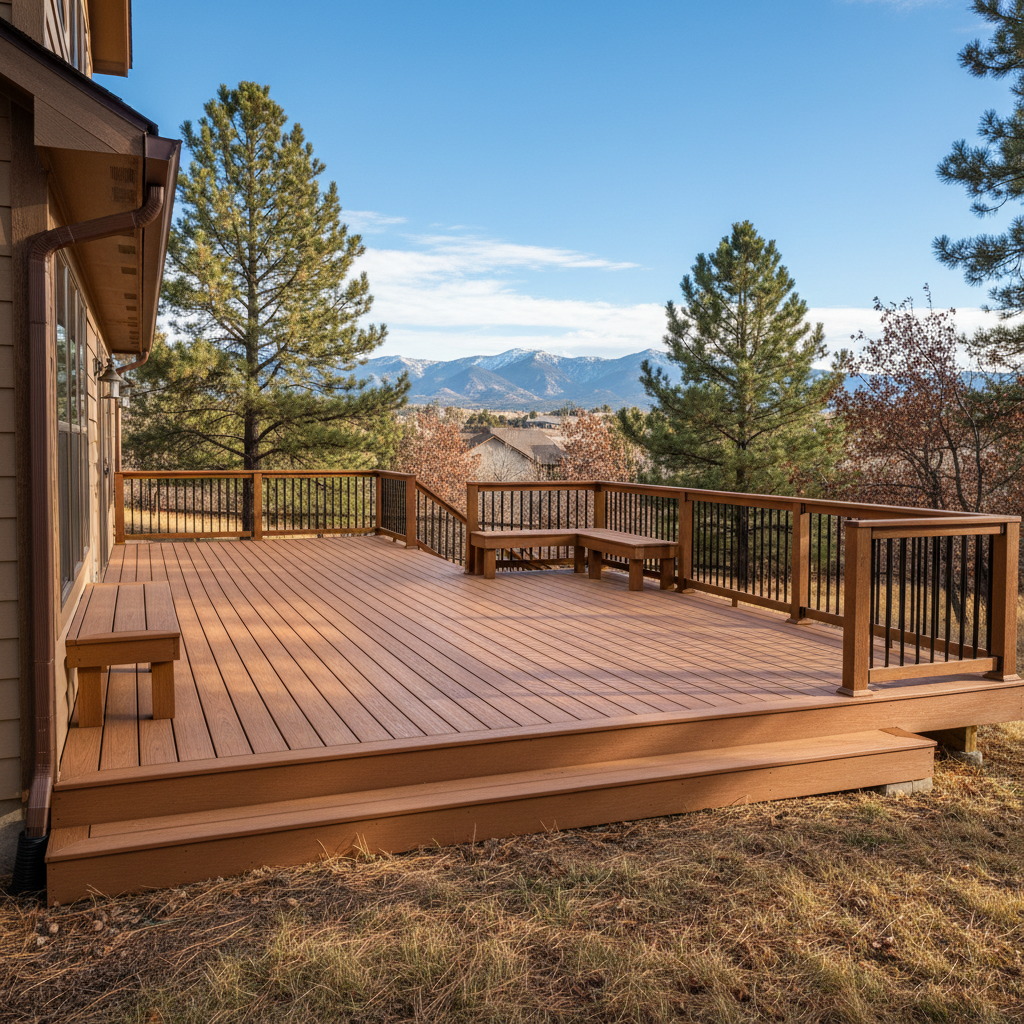
Littleton Composite Decks: Smart Choices for Year-Round Durability
So, you're thinking about a composite deck, or maybe you've already got one. That's a smart move for Littleton homeowners, especially with our wild weather. People often think composite means "set it and forget it," but that's not quite right. While it's definitely lower maintenance than wood, our local climate still throws some curveballs. You need to be ready for them. As a local deck builder, I've seen it all, and I want to share what you need to know to keep your composite deck looking great for years.
When's the Best Time to Build or Repair Your Composite Deck?
This is a question I get a lot. For composite decks, timing really matters. You might think summer's the obvious choice, but it's not always the best. Here's why:
Spring (March-May): This is prime time, honestly. The ground's thawed, the weather's usually mild, and we're not dealing with scorching heat or heavy snow. This allows for proper installation without the material expanding and contracting too much. Plus, you get to enjoy your deck all summer long.
Fall (September-November): Another excellent window opens up here. Temperatures are moderate, and the humidity usually drops. This is great for letting the deck boards settle without extreme temperature swings. You'll beat the winter rush and have your deck ready for next spring.
Summer (June-August): Sure, we can build in the summer, but it comes with challenges. Those 90-degree days we get here in Littleton? They make composite boards expand. If you install them too tightly in the heat, they can buckle and warp when things cool down. We have to be extra careful with gapping during summer installs. Oh, and everyone wants their deck built in summer, so lead times can be longer.
Winter (December-February): We generally avoid major installations in winter. Freezing temperatures and snow aren't ideal for working with composite materials or for the crew. While composite itself can handle the cold, the ground conditions and safety for my team become a real issue. And let's be real, nobody wants to be out there waiting for a deck to be built in January.
Weather Conditions That Affect Composite Deck Work
It's not just the season; the day-to-day weather matters too. Composite decking is pretty forgiving, but extreme conditions can impact installation and longevity:
Temperature: As I mentioned, extreme heat causes expansion, and extreme cold makes things contract. We account for this with gapping, but rapid temperature swings during installation can be tricky. We're always checking the forecast for those big temperature drops or spikes. For instance, if we're working in a neighborhood like Grant Ranch where decks often get full sun exposure all day, we're extra mindful of material expansion.
Moisture: While composite itself doesn't soak up water like wood, working on a wet surface can be slippery and unsafe. Heavy rain can also delay pouring concrete footings or setting posts. We need dry conditions for a solid foundation, period.
Wind: Our Colorado winds can be fierce. High winds make it dangerous to work, especially when lifting long boards or setting railings. It's just not worth the risk.
Protecting Your Composite Deck Investment Year-Round
You've put money into a great composite deck. Now, let's make sure it lasts. Here's how to protect it through Littleton's seasons:
Regular Cleaning: This is the big one. Even though composite doesn't rot, it can get dirty. Dust, pollen, leaves, and even our notorious red dirt from the foothills can pile up. Use a soft brush and mild soap (like dish soap) with water. A pressure washer on a very low setting (under 1500 PSI) with a fan tip can be used, but be careful not to damage the surface. Do this a few times a year, especially after winter and before summer.
Snow Removal: When those big snowfalls hit, you'll want to clear your deck. Use a plastic shovel, not metal, to avoid scratching the surface. Never use rock salt or calcium chloride de-icers; they can stain or damage composite. Sand is a better option for traction if you need it, but usually, just shoveling is enough.
Watch for Scratches and Stains: Composite is tough, but it's not invincible. Dragging heavy furniture or dropping sharp objects can scratch it. Oil, grease, and rust can also stain. Clean up spills immediately. For stubborn stains, check your manufacturer's recommendations; some have specific cleaning products.
Check for Fastener Issues: Over time, especially with our freeze-thaw cycles, fasteners can sometimes loosen or pop up a bit. Do a quick inspection once a year, usually in the spring, and tap down or replace any loose screws. This is especially true for older decks or those that weren't installed by a professional like Mountain Deck.
Trim Overhanging Branches: If you've got trees over your deck, keep them trimmed. Falling leaves, sap, and branches can create extra cleaning work and potential damage.
Taking a little time throughout the year will keep your composite deck looking fantastic and performing well for decades. It's an investment, and a little seasonal care goes a long way in protecting it.