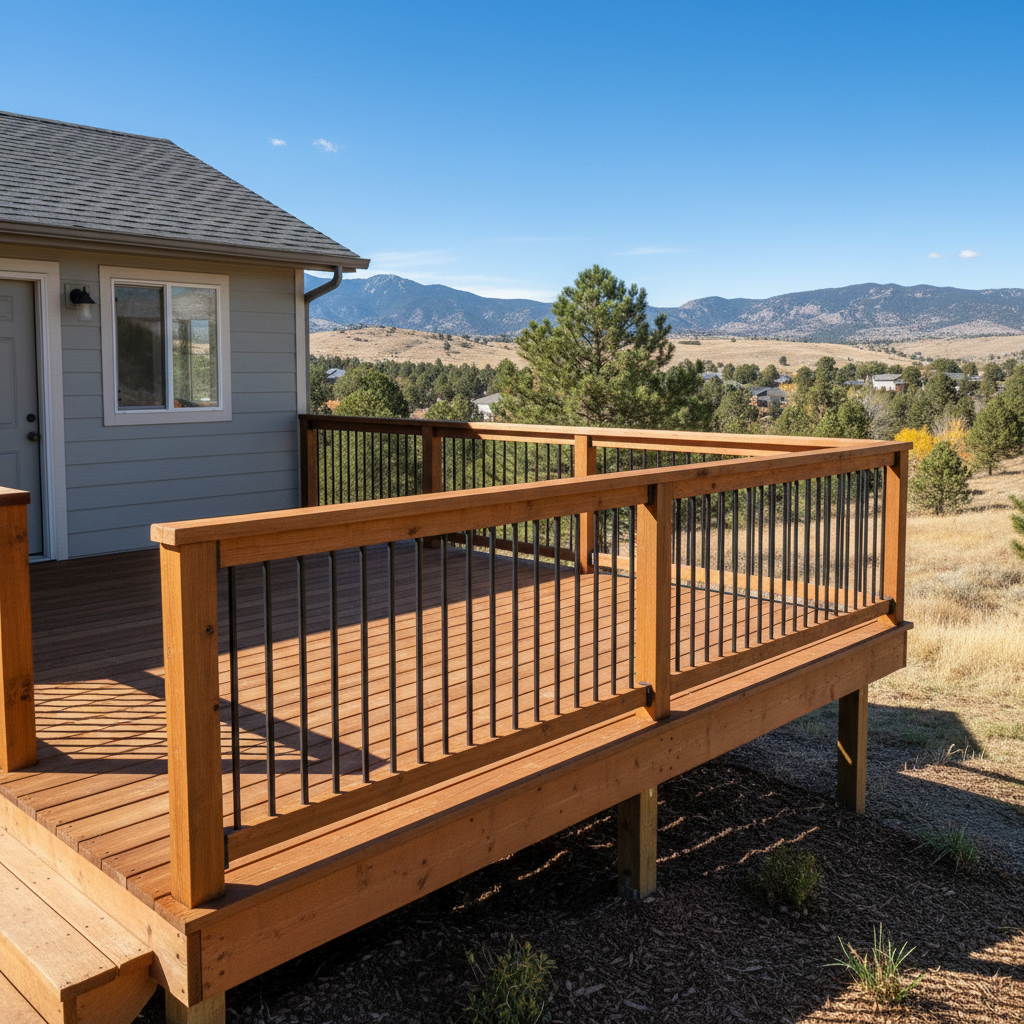
So, you're looking at deck railings, huh? Maybe you're building a new deck, or your old railing is looking a bit sad and wobbly. Whatever the reason, one of the first questions I get is always, "What's this going to cost me?" And look, I get it. Nobody wants to be surprised by a bill. So, let's break down deck railing costs here in Littleton, CO, and give you some solid figures to work with.
What Makes Railing Prices Jump Around?
It's not just one thing that dictates the price of a deck railing, you know? A few big factors come into play:
- Material Choice: This is probably the biggest one. You've got your pressure-treated wood, composite, aluminum, steel, glass, cable... the list goes on. Each one has its own price point, how long it lasts, and what kind of upkeep it needs.
- Linear Footage: Simple math here. The more railing you need, the more it's going to cost. Measure your deck perimeter to get a rough idea.
- Design Complexity: A basic straight run of railing is cheaper than intricate designs, custom curves, or multiple stair sections. Stairs always add to the labor and material cost, mainly because they're trickier to install.
- Permits: Yes, even for just a railing! If you're replacing an old one or adding to a new deck, you might need a permit from the City of Littleton. This is especially true if it's a big change or part of a larger deck project. That's an extra cost and some paperwork, unfortunately.
- Installation Labor: This varies by contractor, but also by the material. Glass panels or cable railings, for example, often take more specialized skills and time to install correctly than basic wood.
Typical Cost Ranges You'll See in Littleton
Alright, let's get to the numbers. These are general ranges for materials and installation, per linear foot, that I see around our area. Keep in mind, these are averages, and custom jobs or specific brands can push these higher.
- Pressure-Treated Wood: This is your most budget-friendly option, no doubt. You're looking at about $40-$70 per linear foot. It's classic, but it needs regular staining or painting to hold up to our Colorado sun and snow.
- Composite Railing: A step up in price, but way less maintenance. Think $70-$120 per linear foot. Brands like Trex or TimberTech offer a lot of color and style options.
- Aluminum Railing: Super durable, low maintenance, and sleek. This usually runs $80-$150 per linear foot. It's a great choice for modern homes or if you want something that practically takes care of itself.
- Cable Railing: If you want to maximize your views of the Rockies, cable is fantastic. It's also one of the pricier options, typically $120-$250 per linear foot. That hardware and the tensioning systems are what drive that cost up.
- Glass Panel Railing: The ultimate view preserver, but also the most expensive. Expect to pay $200-$400+ per linear foot. The glass itself, plus the specialized posts and mounting hardware, really add up.
So, for a typical 200 sq ft deck that might need, say, 40 linear feet of railing (assuming one side is against the house), you could be looking at anywhere from $1,600 for basic wood to $16,000 for high-end glass or cable. Most folks around Littleton, especially in neighborhoods like Grant Ranch or Ken Caryl, tend to go for composite or aluminum for that sweet spot of durability and aesthetics.
What's Included in a Quote from Oasis Decks & Pergolas?
When you get a quote from a reputable contractor, it should be pretty clear what you're paying for. Here's what we typically include:
- Materials: All the railing components – posts, rails, balusters/pickets, infill (cable, glass, etc.), and hardware.
- Labor: The cost for our crew to professionally install everything.
- Disposal: Hauling away your old railing, if we're replacing one.
- Permit Assistance: We'll help you understand if a permit is needed and guide you through the process, though the permit fee itself is usually separate.
- Warranty: Information on the manufacturer's warranty for materials and our own warranty for workmanship.
What's usually NOT included upfront are things like unexpected repairs to the deck structure itself (if we find rot under your old railing, for instance), or significant site prep that wasn't discussed.
How to Avoid Overpaying for Your Deck Railing
Nobody wants to feel like they got ripped off. Here's how to be a smart consumer:
- Get Multiple Bids: Don't just go with the first contractor you talk to. Get at least three detailed quotes. This helps you compare not just price, but also what's included and the contractor's approach.
- Be Specific: Know what you want. The more details you can give (material, color, style, height), the more accurate your quotes will be.
- Check References and Reviews: Any good contractor will have happy customers. Look at online reviews, ask for references, and check their standing with the BBB.
- Understand the Warranty: A good warranty on both materials and labor gives you peace of mind.
- Don't Always Go for the Cheapest: The lowest bid often means corners are being cut, either in material quality or installation expertise. You want value, not just the lowest price. A railing isn't just for looks; it's a safety feature. You don't want it failing on you because someone used cheap fasteners or didn't install it right, especially with our strong winds we get coming off the mountains.
Investing in a quality deck railing isn't just about aesthetics; it's about safety and enjoying your outdoor space for years to come. Do your homework, ask the right questions, and you'll end up with a railing you love.